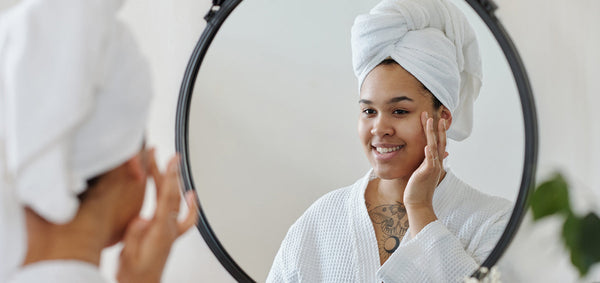
As skin matures, the way makeup sits on the face can change. Products that once blended effortlessly may begin settling into fine lines, clinging to dry patches, or emphasizing texture.
The secret to a smoother, more radiant makeup look isn't necessarily more makeup—it's better skincare preparation.
A thoughtful pre-makeup routine helps create a hydrated, comfortable base so foundation, concealer, and other complexion products can blend more evenly. For mature skin, the focus should be on gentle cleansing, hydration, moisture, and daily sun protection.
At Small Batch Serums, we believe great makeup starts long before foundation touches your skin. When your skin is properly cared for and hydrated, makeup can look more natural, luminous, and comfortable throughout the day.
KEY TAKEAWAY
The best pre-makeup skincare routine for mature skin focuses on hydration, gentle preparation, and sun protection. Start with a gentle cleanser, follow with a hydrating serum, apply moisturizer, and finish with broad-spectrum SPF before makeup.
For an especially smooth finish, give your skincare a few minutes to absorb before applying makeup. Avoid over-exfoliating or layering too many active ingredients immediately before makeup, as irritation and dryness can make texture more noticeable.
Why Prepping Mature Skin Before Makeup Matters
As skin ages, natural changes can affect its moisture levels, elasticity, and texture. Skin may become drier and more prone to fine lines, uneven texture, and dullness, all of which can become more noticeable underneath makeup.
When skin is dehydrated, foundation may cling to dry patches or settle into areas of texture. Heavy layers of makeup can then make the problem more noticeable rather than disguising it.
Proper skincare preparation creates a smoother, more hydrated surface for makeup application. Rather than trying to cover every imperfection with additional makeup, the goal is to improve the condition of the skin underneath it.
Step 1: Start With a Gentle Cleanser
Cleansing is the first step in any morning skincare routine, but mature skin often benefits from a particularly gentle approach.
Harsh or overly stripping cleansers can leave skin feeling tight and dry, which can make makeup application more difficult. Instead, look for a gentle cleanser that removes overnight buildup without leaving the skin feeling uncomfortable.
Creamy, milky, or low-foaming cleansers can be good options for dry or mature skin.
Use lukewarm water rather than hot water, and gently pat your face dry with a soft towel instead of rubbing.
If your skin isn't oily and you don't feel the need for a full cleanse in the morning, simply rinsing with water may also be sufficient for some people.
Step 2: Apply a Hydrating Serum
For mature skin, hydration is one of the most important parts of pre-makeup preparation.
A hydrating serum can help replenish moisture and leave the skin feeling softer and more supple, creating a more comfortable base for makeup.
Look for ingredients such as:
-
Hyaluronic acid: Helps attract and retain moisture.
-
Glycerin: A humectant that helps support skin hydration.
-
Niacinamide: Supports the skin barrier and helps improve the appearance of uneven tone.
-
CoQ10: Provides antioxidant support.
-
Vitamin C: Helps brighten the appearance of skin and provides antioxidant support.
A hyaluronic acid serum can be particularly useful before makeup when your skin feels dry or dehydrated.

A CoQ10 serum can also provide antioxidant support while complementing a hydration-focused routine.

If you're using vitamin C in the morning, apply it according to the product's directions before moving on to moisturizer and sunscreen.

Should You Apply Serum to Damp Skin?
This depends on the serum. Hydrating ingredients such as hyaluronic acid are often comfortable to apply to slightly damp skin, but always follow the directions for your specific product.
Rather than aggressively rubbing the serum into your skin, gently smooth or press it over the face.
Step 3: Apply a Moisturizer
After your serum, apply a moisturizer to help seal in hydration and create a soft, comfortable base for makeup.
The best moisturizer for mature skin will depend on your skin type. If your skin is dry, you may prefer a richer cream. If your skin is combination or oily, a lightweight lotion or gel-cream may work better.
Look for moisturizing and barrier-supporting ingredients such as:
-
Ceramides
-
Squalane
-
Glycerin
-
Hyaluronic acid
-
Peptides
The goal isn't to leave your skin greasy. You want enough moisture to prevent makeup from catching on dry areas while still allowing your complexion products to sit comfortably.
Give Your Skincare Time to Absorb
One of the simplest ways to improve makeup application is to avoid immediately layering foundation over wet skincare.
Give your serum and moisturizer a few minutes to settle before applying makeup. If your skin still feels very slippery, gently press away any excess product with clean fingertips or a tissue.
Step 4: Don't Skip SPF
Sunscreen is an essential part of any morning skincare routine, including one designed for mature skin.
Daily UV exposure contributes to visible signs of premature skin aging, including uneven pigmentation, fine lines, and loss of firmness. Protecting your skin from UV radiation is therefore one of the most important things you can do for long-term skin health.
Choose a broad-spectrum sunscreen with SPF 30 or higher and apply it after your moisturizer and before makeup.
If you're spending extended time outdoors, remember that sunscreen needs to be reapplied according to its directions.
Allow your sunscreen to settle before applying foundation or other makeup products.
Step 5: Consider a Hydrating Primer
Primer isn't mandatory, but it can be useful if you want additional smoothing before makeup.
For mature skin, look for primers designed to hydrate or smooth rather than aggressively mattify the complexion.
A hydrating primer can provide another layer between skincare and makeup and may help foundation apply more evenly.
If your skincare routine already leaves your skin smooth and your foundation applies well without primer, you may not need one.
Bonus Tips for Long-Lasting, Radiant Makeup on Mature Skin
Once your skincare is prepped, a few makeup techniques can help create an even more natural finish.
Exfoliate Gently
Regular exfoliation can help improve the appearance of rough texture, but more isn't necessarily better—especially for mature or sensitive skin.
If you use an exfoliating product, choose one appropriate for your skin and follow its directions. Avoid aggressive scrubs or exfoliating immediately before makeup if your skin tends to become irritated.
Apply Makeup in Thin Layers
Heavy foundation can settle into fine lines and emphasize texture.
Instead, start with a thin layer and build coverage only where you need it. A damp makeup sponge or soft brush can help distribute product evenly.
Use Cream-Based Products Strategically
Cream blush and highlighter can create a fresh, natural-looking finish and may be more forgiving on dry or textured areas than heavy layers of powder.
That doesn't mean powder is off-limits. If you prefer powder products, use them selectively rather than applying a thick layer across the entire face.
Be Careful Around Fine Lines
When applying concealer around the eyes or mouth, less is often more.
Use a small amount of product, blend carefully, and avoid repeatedly layering makeup over areas where it naturally settles.
Use Setting Spray Instead of Excess Powder
If you want to set your makeup, a hydrating or natural-finish setting spray can help maintain a fresh appearance.
If you use powder, concentrate it on areas where you actually need it rather than applying a heavy layer everywhere.
Common Pre-Makeup Mistakes to Avoid
Even a great skincare routine can make makeup look less polished if you're making a few common mistakes.
Using Too Many Products
Layering multiple serums, exfoliants, oils, and creams immediately before makeup can leave the skin overly slick and may cause products to pill.
Keep your morning routine simple.
Over-Exfoliating
Trying to create an ultra-smooth surface by exfoliating aggressively can actually lead to redness, dryness, and increased texture.
Gentle, consistent care is preferable to aggressive exfoliation.
Applying Too Much Moisturizer
Mature skin needs hydration, but more moisturizer isn't always better before makeup. Too much product can cause foundation to slide or separate.
Use enough to comfortably hydrate your skin, then allow it to absorb.
Skipping Sunscreen
Even if you're wearing foundation with SPF, don't assume it provides enough protection on its own. Use a dedicated broad-spectrum sunscreen as part of your morning skincare routine.
Frequently Asked Questions
What is the best skincare routine before makeup for mature skin?
A simple routine includes a gentle cleanser, hydrating serum, moisturizer, and broad-spectrum SPF 30 or higher. If desired, you can add a hydrating primer before makeup. The goal is to create a hydrated, comfortable base without overloading the skin with products.
What serum is best before makeup for mature skin?
A hydrating serum containing ingredients such as hyaluronic acid or glycerin can be particularly useful before makeup. Antioxidant ingredients such as CoQ10 and vitamin C can also complement a mature-skin routine.
Should mature skin use hyaluronic acid before makeup?
Yes. Hyaluronic acid can help attract and retain moisture, making it a popular ingredient for dry or dehydrated skin. Applying a hydrating serum before moisturizer can help create a softer base for makeup.
Should I use moisturizer before makeup if I have mature skin?
Yes. Moisturizer helps support the skin barrier and can reduce the appearance of dryness that causes makeup to cling to rough areas. Choose a formula appropriate for your skin type and allow it to absorb before applying makeup.
How long should I wait between skincare and makeup?
A few minutes is generally enough for most skincare products to settle before makeup application. If your skin still feels wet or overly slippery, give the products additional time to absorb.
Should mature skin use primer?
Primer is optional. If your makeup already applies smoothly, you may not need one. If you want additional hydration or smoothing, choose a primer formulated for your skin type rather than one that leaves the complexion overly matte or dry.
How do you keep foundation from settling into wrinkles?
Start with well-hydrated skin, use a lightweight foundation, and apply thin layers rather than heavy coverage. Avoid applying excessive powder over fine lines, and use concealer selectively rather than layering it heavily.
Is vitamin C good before makeup?
Vitamin C can be used as part of a morning skincare routine. It provides antioxidant support and can help improve the appearance of uneven tone and dullness over time. Follow with moisturizer and broad-spectrum sunscreen.
Can I use CoQ10 and hyaluronic acid together before makeup?
Yes. These ingredients can complement one another. Hyaluronic acid focuses on hydration, while CoQ10 provides antioxidant support. Layer them according to the directions for your individual products and allow them to settle before applying makeup.
How often should mature skin exfoliate?
There isn't one frequency that works for everyone. Mature or sensitive skin may benefit from less frequent exfoliation, while other skin types may tolerate it more often. Follow the directions for your exfoliating product and reduce frequency if you experience dryness or irritation.
Great Makeup Starts With Great Skin Prep
Prepping mature skin before makeup doesn't require a complicated routine. The most important steps are gentle cleansing, hydration, moisturizer, and daily sun protection.
A hydrating serum can help create a softer, more supple canvas, while moisturizer helps maintain comfortable skin throughout the day. SPF protects against UV exposure, and a hydrating primer can be added if you want additional smoothing before makeup.
The key is to avoid overwhelming your skin. When your skincare routine is simple, consistent, and suited to your skin's needs, makeup can look smoother and more natural—without relying on heavy layers of product.
At Small Batch Serums, we believe skincare should support your natural complexion rather than cover it up. When your skin is hydrated, comfortable, and cared for, your makeup has a better canvas to work with at every age.