Key Takeaways
- The jaw and chin have a high concentration of oil glands and get touched constantly (hands, phones), which makes this area especially prone to clogged pores.
- Deep, painful bumps that never come to a head are usually hormonal; surface whiteheads and blackheads point to clogging and excess oil instead.
- Cyclical breakouts tied to your period are common and don't necessarily mean anything is medically wrong — a true hormonal imbalance usually comes with other signs like irregular periods or sudden hair growth.
- Salicylic acid, benzoyl peroxide, adapalene, and azelaic acid are the most effective actives for chin acne; niacinamide and hyaluronic acid support the barrier so those actives don't backfire.
- Most acne treatments take 8–12 weeks of consistent use to show real results, and skin often looks worse before it gets better.
- See a dermatologist if acne is cystic, leaves scars, or hasn't improved after three months of consistent care.
If your breakouts keep showing up in the same spot along your jaw and chin, you are not imagining it. The lower face is one of the most common places for acne to settle, and the reasons behind it are pretty specific. Chin acne tends to be deeper, more stubborn, and more cyclical than the random pimple you get on your forehead. That is frustrating, but it is also useful. When breakouts follow a pattern, you can actually do something about them.
This guide breaks down what causes chin acne, why hormones get blamed so often, which triggers make it worse, and the ingredients and routine that clear it up. We will also cover what to do when none of it works and it is time to bring in a dermatologist.
Main Causes of Chin Acne
Chin acne starts the same way acne does anywhere else on the face. A pore gets clogged with dead skin cells and oil. Bacteria move in. The pore gets inflamed, and you get a pimple. The difference is that the chin and jaw have a high concentration of oil glands, which makes the area more prone to clogging in the first place. (Curious why breakouts cluster by zone? Our face mapping guide explains what different problem areas typically mean.)
A few things drive that process in the chin specifically:
- Excess oil production. When your skin produces more sebum than it can clear, pores back up. The chin sits in the lower part of the T-zone for a lot of people, so it stays oilier than the cheeks.
- Dead skin buildup. If skin cells are not turning over and shedding properly, they pile up at the surface and mix with oil to form a plug. That plug is the start of a blackhead, whitehead, or deeper cyst.
- Bacteria (C. acnes). These live on everyone's skin and are harmless until a clogged pore gives them a place to multiply. Once they do, inflammation follows, and that is when a small bump turns red, swollen, and sore.
- Touch. The chin gets handled constantly. People rest their hand on it, prop it on their phone, and lean on it at a desk. Every contact transfers oil, bacteria, and pressure to an area that is already prone to clogging.
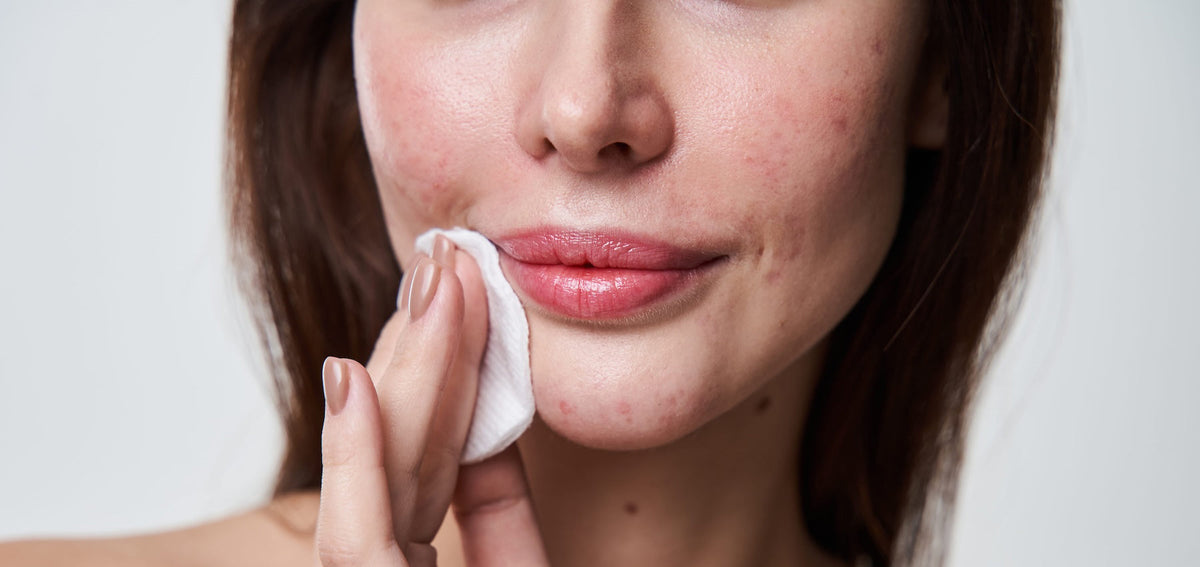
The type of acne you see on the chin tells you something too. Surface whiteheads and blackheads point to clogging and oil. Deep, painful bumps that sit under the skin and never come to a head point to a hormonal pattern, which is where most chin acne lives — and where cystic acne on the chin specifically tends to show up.
Is Chin Acne a Sign of Hormonal Imbalances?
Chin acne has a strong reputation as hormonal acne, and that reputation is mostly earned. The lower face and jaw are the classic landing zone for breakouts tied to hormone fluctuations. If your acne flares in the same spot every month, hormones are a likely driver. (If you're not sure which type you're dealing with, our hormonal vs. bacterial acne guide walks through how to tell them apart.)
Here is what is happening. Androgens, the group of hormones that includes testosterone, signal your oil glands to produce more sebum. When androgen activity rises, your skin gets oilier and your pores clog faster. The oil glands along the jaw and chin are especially sensitive to these signals, which is why breakouts concentrate there.
For many people who menstruate, this shows up on a schedule. Hormone levels shift across the cycle, and the week before a period is a common flare window. The acne is often deep, tender, and stubborn rather than surface level.
Hormonal acne can also show up around other life stages and conditions:
- Puberty
- Pregnancy
- Perimenopause
- Starting or stopping birth control
- Polycystic ovary syndrome (PCOS), which can drive persistent jaw and chin acne along with other symptoms
A key point worth being clear about: hormonal acne does not always mean something is medically wrong with your hormones. Most of the time, your hormones are in a normal range and your oil glands are simply reactive to normal fluctuations. A true imbalance is possible, but it usually comes with other signs, like irregular periods, sudden excess hair growth, or rapid changes. If you see those alongside the acne, that is worth raising with a doctor. On its own, cyclical chin acne is common and treatable.
Common Triggers That Can Make Chin Acne Worse
Causes are what create acne. Triggers are what pour fuel on it. You may not be able to change your hormones overnight, but you can usually remove a few triggers that are making things worse:
- Touching and picking. Resting your chin on your hand, picking at bumps, and squeezing pimples all push bacteria deeper and increase inflammation. Picking also leaves marks and scars that outlast the breakout by months.
- Phones. They press against the chin and jaw every time you take a call. The screen collects oil and bacteria all day, then transfers it right back to the most breakout-prone part of your face.
- Masks, helmet straps, and chin straps. These create friction and trap heat and sweat against the skin. This kind of acne even has a name, acne mechanica, and the chin takes the brunt of it.
- Pore-clogging products. Heavy moisturizers, certain foundations, and rich oils can sit in pores and block them. Look for the word noncomedogenic, which means a product is formulated not to clog pores.
- Diet. High-glycemic foods and dairy are the two most studied links to acne. They do not affect everyone, but if your skin reacts, cutting back can help.
- Stress and poor sleep. Neither creates acne by itself, but stress raises cortisol, which can increase oil production and slow healing — and poor sleep does the same thing. Both can tip a borderline week into a full breakout.
- Over-washing and over-scrubbing. Stripping the skin to fight oil damages the barrier, which leads to more irritation and often more oil, not less.
The Best Ingredients for Treating Chin Acne
The right ingredients clear pores, calm inflammation, and keep oil in check without wrecking your skin barrier. You do not need all of them. You need the right two or three for your acne type.
- Salicylic acid. A beta hydroxy acid that gets into the pore and dissolves the oil and dead skin clogging it. It is the strongest pick for blackheads, whiteheads, and oily skin. Look for it at 0.5 to 2 percent in a cleanser or leave-on treatment — our guide to salicylic acid covers how to add it to a routine.
- Benzoyl peroxide. Kills acne-causing bacteria and reduces inflammation. It works well on red, angry pimples. It can be drying, so start with a lower strength like 2.5 percent and use it on the breakout area rather than all over.
- Retinoids. Speed up cell turnover so pores stop clogging in the first place. Adapalene is available over the counter and is one of the most effective long-term tools for acne. It also fades the marks left behind. Start slow, two or three nights a week, because it can irritate at first — see when to add retinol to your routine for pacing tips.
- Azelaic acid. A gentler all-rounder. It clears pores, reduces bacteria, calms redness, and fades dark spots. It tends to suit sensitive skin and works well alongside hormonal acne. Check what pairs safely with azelaic acid before adding other acids.
- Niacinamide. A form of vitamin B3 that helps regulate oil, reduce inflammation, and strengthen the skin barrier. It is not a heavy hitter on its own, but it makes stronger actives easier to tolerate. See how to layer niacinamide with retinol and hyaluronic acid and what not to mix it with.
- Hyaluronic acid. Does not treat acne directly, but it earns its place. Acne actives are drying, and dry, damaged skin produces more oil and breaks out more. Hyaluronic acid replaces the water your actives strip out and keeps the barrier intact.

A note on pairing: strong actives work best when they are not all used at once. Benzoyl peroxide and retinoids together can be too harsh for many people. Alternate them, or use one in the morning and one at night — our guide to layering acids covers safe combinations in more detail.
How to Build a Skincare Routine for Chin Acne
A good acne routine is simple and consistent. More products do not mean faster results. They usually mean more irritation. Here is a framework that works for most chin acne.
Morning
- Cleanse with a gentle, noncomedogenic cleanser. A salicylic acid cleanser is a good choice for oily skin.
- Apply a lightweight treatment if needed. Niacinamide works well in the morning to control oil and calm redness.
- Moisturize with an oil-free, noncomedogenic formula. Do not skip this step even if your skin is oily.
- Finish with a broad-spectrum SPF 30 or higher. Sunscreen protects healing skin and prevents acne marks from darkening.
Evening
- Cleanse to remove the day's oil, sunscreen, and bacteria. Double cleanse if you wore makeup.
- Apply your main active. This is the time for a retinoid like adapalene, or a spot treatment of benzoyl peroxide on active breakouts.
- Moisturize to support the barrier overnight. A hydrating serum followed by moisturizer helps offset the dryness from actives.
For a fuller version of this sequence, see our nighttime routine for acne-prone skin.
Two rules make or break this: introduce one new active at a time so you can tell what is working and what is irritating, and give it time. Most acne treatments take eight to twelve weeks to show real results, and skin often looks worse before it gets better. Consistency beats intensity every time.

How to Prevent Future Chin Breakouts
Clearing chin acne is half the job. Keeping it away is the other half, and prevention is mostly about habits:
- Keep your hands off your chin. This single change does more than most people expect. Be aware of where you rest your face during the day.
- Clean what touches your skin. Wipe your phone screen regularly, wash pillowcases once or twice a week, and swap out anything that presses against your jaw, like a dirty mask or chin strap.
- Stay consistent with your routine even when your skin is clear. Acne prevention is ongoing. Stopping your routine the moment things improve is the fastest way to invite breakouts back.
- Do not over-treat. When skin clears, the urge is to keep hitting it with actives. That dries out the barrier and can trigger a fresh round of breakouts. Scale back to maintenance and let the skin settle.
- Protect your barrier. Hydration, sunscreen, and gentle products keep skin resilient. A strong barrier is far less reactive to the hormone fluctuations that drive chin acne in the first place.
- Track cyclical breakouts. Knowing your flare window lets you stay ahead of it with consistent care rather than scrambling once a breakout has already arrived.
When to See a Dermatologist for Persistent Chin Acne
Most chin acne responds to a solid routine and over-the-counter ingredients. Some does not, and pushing harder with the same products is not the answer.
See a dermatologist if:
- Your acne is deep, painful, and cystic, or if it leaves scars and dark marks — early help prevents permanent scarring (our hyperpigmentation guide covers fading marks that are already there).
- You have used a consistent routine for three months with no real improvement.
- Your acne is severe or spreading.
- It is affecting your confidence and daily life.
None of those are things you have to tough out. A dermatologist has options you cannot get over the counter: prescription-strength retinoids, topical and oral antibiotics for inflammation, hormonal treatments like certain birth control pills or spironolactone for hormonal chin acne, and in-office procedures. If a hormonal condition like PCOS is suspected, they can also order testing and connect the dots between your skin and your overall health.
Asking for help is not a last resort. It is the efficient move when your skin is not responding.
A Gentle, Consistent Approach Wins
Chin acne is common, it is treatable, and it usually comes down to a manageable set of causes and triggers, covered in our breakdown of the best serums for acne-prone skin. The fix is rarely a single miracle product. It is a simple routine, the right ingredients for your acne type, and the patience to let them work.
It also helps to protect the skin while you treat it. Harsh acne actives clear breakouts, but they dry out and stress the barrier, and stressed skin breaks out more. That is where supportive, clean formulas earn their place. A hyaluronic acid serum replaces the hydration your actives strip away and pairs well with stronger treatments — it's fragrance-free, which matters for reactive, breakout-prone skin. If your skin runs sensitive, our guide to serums for sensitive skin covers how to keep the barrier strong while you work through a breakout.
Treat the acne, support the skin, and stay consistent. That combination clears chin breakouts and keeps them from coming back.